An independent, nonpartisan policy research and consultancy institute.
Logos Research Centre
We deliver dynamic, actionable, and effective policy for an evolving global order — research built for decision-makers, not academic reviewers. The work runs across AI, climate, health, economics, and international relations.
Five Fields of Inquiry
Each desk pairs quantitative modelling with practitioner-grade outputs — actionable frameworks, not theoretical treatises.
Mapping geopolitical shifts and security protocols for a decentralized world.
DeterrenceInstitutionsActors
All International work →OHCHR Consultation Call Comments on Draft General Comment No. 38 on Article 22 of the ICCPR (the Right to Freedom of Association)
Policy Comment addressing the the Draft General Comment No. 38 on Article 22 of the ICCPR (the Right to Freedom of Association) by the United Nations OHCHR. Published by UN OHCHR.
Aadyant Singh Harnwal , Rabi ul Awal , Joi Ysabella Clara , Videep Agarwal, and Jackson Dorris
Public Comment on the EU Arctic Policy Update
The Arctic faces tensions over resources, shipping routes, and militarization, complicated by climate change. Balancing environmental protection with national security and economic interests remains the central challenge, with indigenous voices offering new perspectives.
Jackson Dorris (Primary Author), Rabi Ul Awal, Videep Agarwal, Yiren Jing, Aleesha Bhatti, Aadyant Singh Harnwal (Advisor)
Public Comment on 2026 Special 301 Review: Identification of Countries Under Section 182 of the Trade Act of 1974
The comment highlights persistent IP and market access failures harming U.S. interests, calls for stronger Special 301 action, clearer enforcement benchmarks, and targeted reforms to align with WTO TRIPS obligations.
Ayushmaan Mukherjee , Isabella Deng, Videep Agarwal, Timothy Chummar
Governance frameworks for autonomous systems and algorithmic constitutionalism.
GovernanceAuditCompute
All AI work →Stakeholder consultation on the Draft Guidelines on the classification of high-risk AI systems under Article 6 of the AI Act
Policy comment on the Draft Guidelines on the classification of high-risk AI systems under Article 6 of the AI Act, published by the European Union.
Aadyant Singh Harnwal, Claire Yang, Stanley Zhou, and Anvitha J
Public Comment on The EU Cybersecurity Act
This paper announces the 2026 revision to the European Union Cybersecurity Act, an update designed to strengthen the EU’s resilience to increasingly sophisticated threats to infrastructure and supply chains. While the original 2019 Act established a foundation through the European Cybersecurity Certification Framework (ECCF) and a permanent mandate for ENISA, the recent landscape has necessitated a more aggressive and comprehensive strategy. Key findings include operational expansion (81.5% budget increase and the creation of the EU Cybersecurity Reserve to assist Member States), supply chain de-risking (including a horizontal framework to identify and phase out “high risk” suppliers), and critical policy gaps (lack of mandatory certification consistency and fragmented coordination between EU institutions and individual member states, which can disproportionately burden SMEs). Ultimately, while the transition away from high-risk suppliers carries short-term costs, the long-term benefits are projected to save EU businesses up to 15.3 billion euros over five years.
Claire Yang, Abhinav Kokkula, Ellta T. Abraham, Suryaa Kalyan, Saathvik Valvekar
Public Comment on HHS Health Sector AI RFI - Request for Information: Accelerating the Adoption and Use of Artificial Intelligence as Part of Clinical Care
This paper responds to the U.S. Department of Health and Human Services’ Request for Information on accelerating the adoption of artificial intelligence in clinical care. It identifies key regulatory, workforce, interoperability, and equity barriers to AI implementation and offers policy recommendations to support ethical and effective integration across the U.S. healthcare system.
Claire Yang, Ellta T. Abraham, Saathvik Valvekar
Managing bio-technical risks and future institutional health infrastructures.
PandemicsCoverageBiotech
All Health work →Analyzing post-scarcity transitions and sovereign debt architectures.
DebtAutomationTrade
All Economics work →Response to “Public consultation on taxation: Revisions to Chapter VII of the OECD Transfer Pricing Guidelines”
Response to “Public consultation on taxation: Revisions to Chapter VII of the OECD Transfer Pricing Guidelines” (Organisation for Economic Co-operation and Development - Public Consultation)
Jigyasa Prabhakar, David Siu, Sharmili Karthik, Dymphna William, Timothy Chummar
Public Comment on “Small Business and Small Organization Definitions for Investment Companies and Investment Advisers (Securities And Exchange Commission - Proposed Rule)
The SEC proposes updating "small entity" definitions for investment companies, raising asset thresholds and adding inflation adjustments to reduce outdated regulatory burdens on smaller investment firms in modern markets.
Jigyasa Prabhakar , Subham Bajgai, David Siu, Timothy Chummar, Aadyant Singh Harnwal
Public Comment on “Request For Information: Reserve Bank Payment Account Prototype” (Federal Reserve - Notice)
The Federal Reserve’s Payment Account supports payments innovation but suffers from vague rules; we propose clearer timelines, lighter burdens, and earlier supervision to enhance predictability and long-run effectiveness.
Jigyasa Prabhakar, Shreshtha Aggarwal, Anirudh Venkatesan, Timothy Chummar
Building practical transition policy across decarbonization, adaptation finance, and climate risk governance.
TransitionFinanceRisk
All Climate work →The Masthead
We bypass traditional narrative constraints to deliver dynamic, actionable and effective policy for an evolving global order.
Latest Work
Papers, advisory notes, and open commentary from the Centre, newest first.

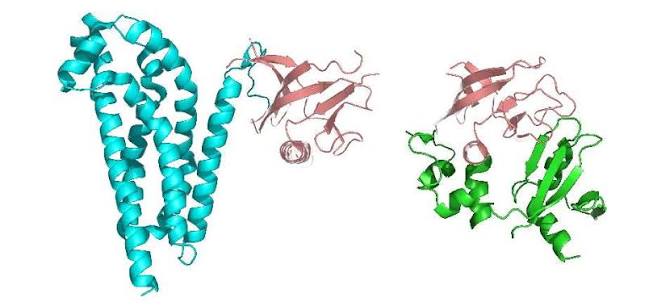
Designing Proteins From Scratch
Designing Proteins From Scratch
Kevin Doshi
How Neurodiversity Discrimination in Central Asia Exposes Statutory Gaps in Workplace Health Policy
Systematic reliance on rigid medical classifications leaves neurodivergent workers vulnerable to informal dismissals despite statutory employment quotas.
Tomiris Jussupbekova · edited by Victor Hsu



Recognition
Cited & published by
People of Logos
Researchers, fellows, and editors behind the work.
Founder — International Relations
Founder at Logos Research Centre.
Founder — AI Policy
Founder at Logos Research Centre.
Founder — Economic Policy
Founder at Logos Research Centre.
Department Head — Climate Policy
Department Head at Logos Research Centre.
Department Head — Health Policy
Department Head at Logos Research Centre.
Department Head — International Relations
Department Head at Logos Research Centre.
Aadyant Singh Harnwal
Founder — International Relations
Founder at Logos Research Centre.